

Car Week
The Pebble Beach Pageant: Loafers, Lugnuts, and Anxiety
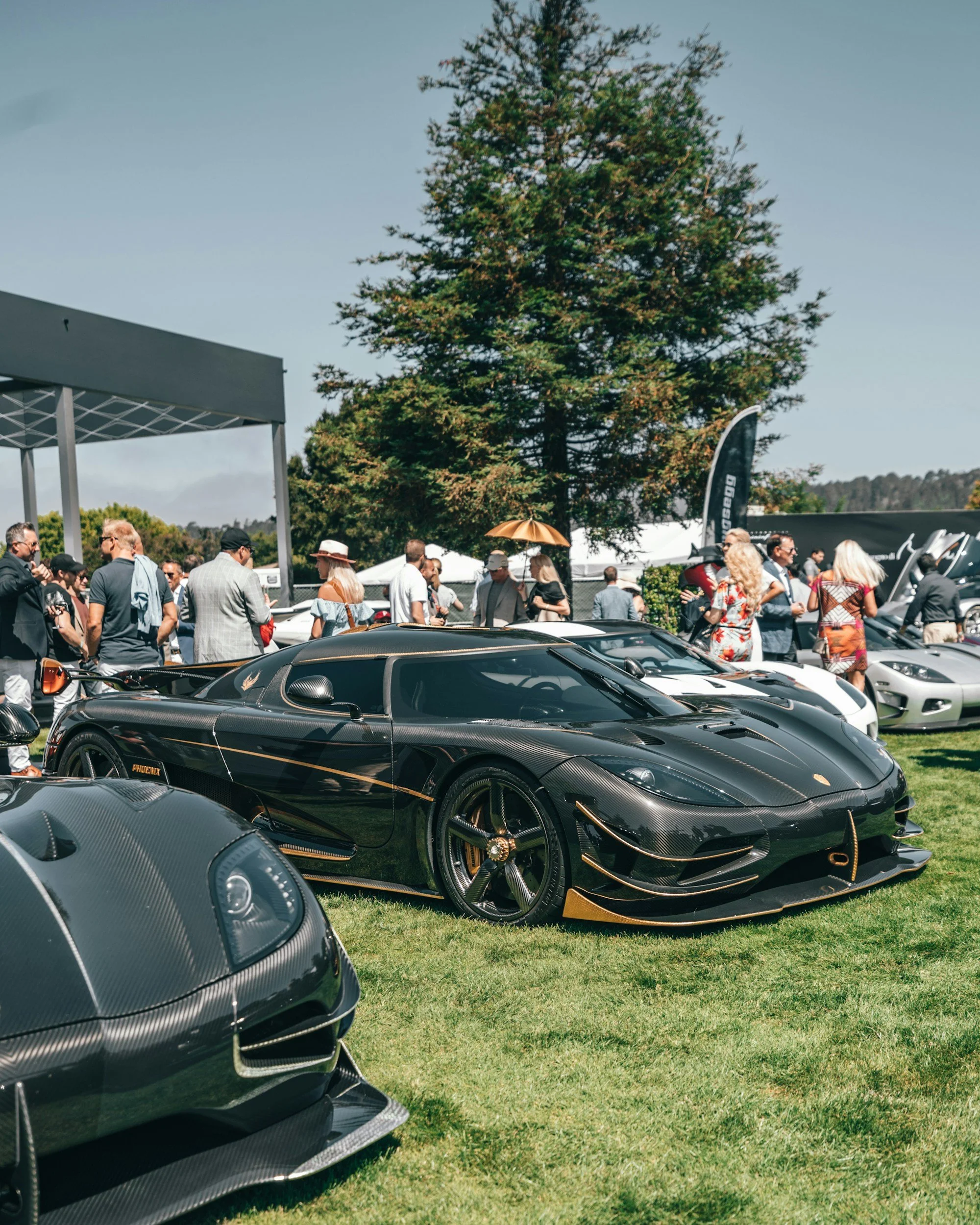
Every August, the quiet, fog-shrouded fairways of the Monterey Peninsula undergo a spectacular, billionaire-fueled transformation. The Pebble Beach Concours d'Elegance represents the grand finale of Monterey Car Week, a competition of elegance where some of the wealthiest individuals on the planet convene on a manicured golf course to determine who owns the most historically correct and tasteful antique machine. The social theater is as predictable as it is breathtaking: serious collectors, hedge-fund managers, and auto-historians rubbing shoulders with gentlemen wearing loafers without socks, and ladies in hats boasting their own gravitational fields.
Amidst this parade of aristocratic posturing on the grass lie multimillion-dollar Ferraris, Bugattis, and Bentleys, whose owners politely insist their rolling sculptures are 'priceless' immediately after telling you down to the single dollar exactly what they paid for them. But in 2026, the real fireworks occurred off the grass, under the heavy-lit auction marquees, where a record-shattering torrent of cash rewrote the collector car history books.
The Post-Block Special: Records Smashed in the $760 Million Torrent
By the time the final gavel fell across the five major auction houses (RM Sotheby's, Gooding & Company, Mecum, Broad Arrow, and Bonhams), Monterey Car Week 2026 recorded an unprecedented $758 Million to $762 Million in total sales, absolutely demolishing the previous all-time record of $471 Million set in 2022. Overall, 1,133 vehicles were offered, with 859 finding new homes—a robust 76% sell-through rate. An astonishing 142 cars sold for over $1 Million, driving the average transaction price to a staggering $887,399. The market is not just healthy; it has bolted into the stratosphere, driven by modern supercar liquidity and blue-chip, historical provenance.
Official Monterey 2026 Gavel Results
2026 Ferrari Luce 'Tailor Made' (Chassis 0) — $40,000,000
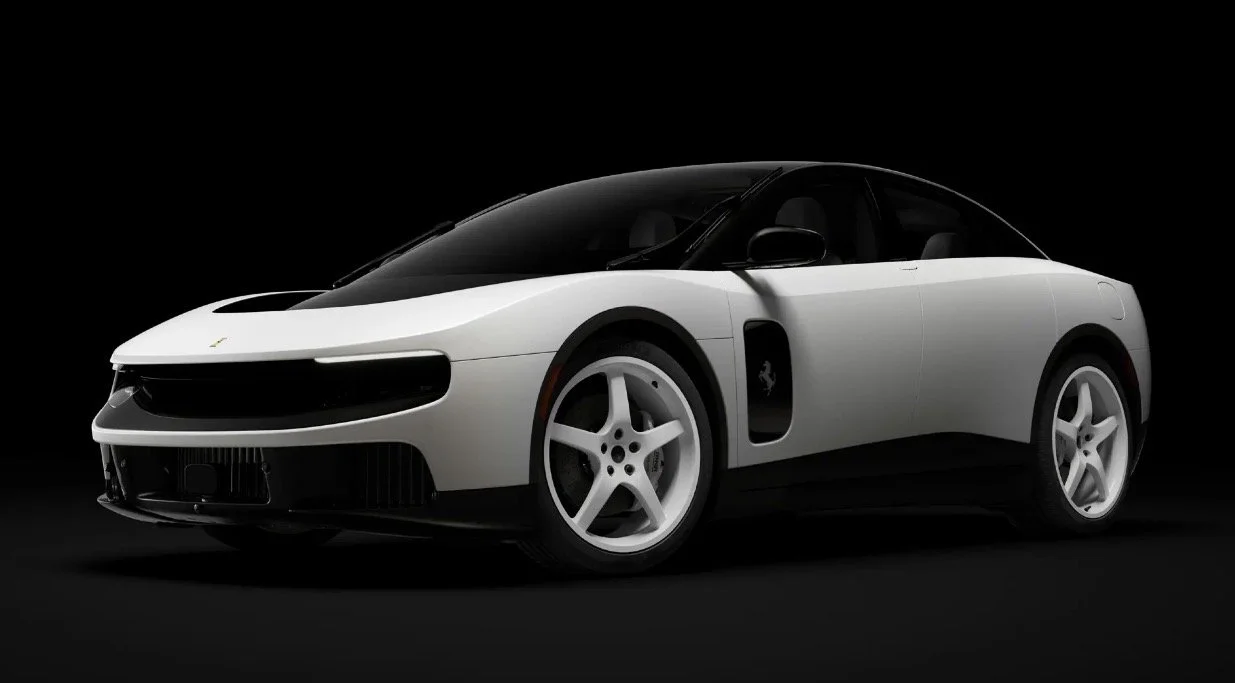
The single biggest surprise of Car Week occurred at RM Sotheby's, where 'Chassis 0' of the brand-new, highly controversial 2026 Ferrari Luce 'Tailor Made' crossed the block. The Luce is Ferrari's first-ever all-electric car and first five-seat sedan, a vehicle the internet has loved to mock. Yet, offered entirely for charity, this first production chassis ignited a furious bidding war, eventually hammering for an astonishing $40,000,000—nearly forty times its realistic pre-sale estimate of $1.1 Million. While the staggering price is primarily driven by massive philanthropic tax write-offs and a guaranteed ticket into Ferrari's inner circle of elite VIP buyers, it nevertheless set an all-time record for any new car, any electric vehicle, and any charity lot.
2003 Ferrari Enzo (Chassis ZFFCW56A130132652) — $10,675,000
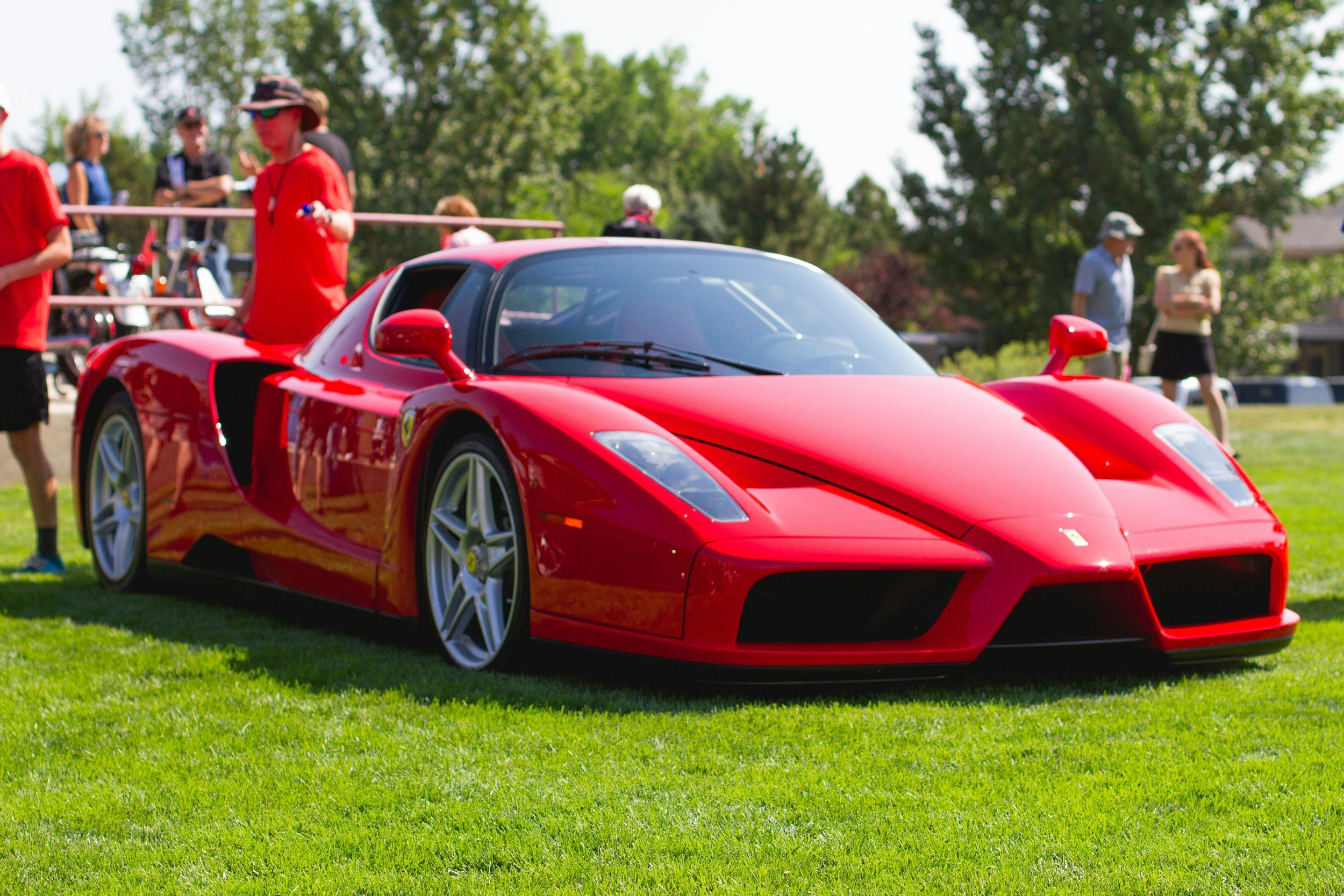
Broad Arrow Auctions marked its debut as the official partner of The Quail, A Motorsports Gathering, by grossing $97.4 Million. Its crowning lot, the black-on-red 2003 Ferrari Enzo offered without reserve, drew frantic bidding before selling for $10,675,000 to a young, millennial-aged collector. The sale illustrates the dramatic generational shift currently reshaping the market.
The Cold Room: Unexpected Fails & Selective Bidding
Despite record-shattering overall figures, Monterey 2026 was not a rising tide for every ship. Collectors have grown highly selective, resulting in dramatic, high-profile casualties for cars with unrealistic expectations, improper pricing, or non-authentic modifications:
· 1962 Aston Martin DB4 GT Zagato (RM Sotheby's): Carrying a stellar estimate of $12,000,000 to $15,000,000, this matching-numbers masterpiece went UNSOLD, representing the most expensive casualty of the week. Bidders refused to meet the aggressive reserve, proving that even legendary coachwork is subject to pricing gravity if impeccable historical context is not fully aligned.
· 1968 Porsche 907 Langheck (Gooding & Company): This iconic long-tail endurance racer, estimated at $4,500,000 – $5,500,000, suffered on the block, hammering far below its low estimate at a disappointing $3,305,000.
· 2000 Nissan Skyline R34 GT-R V-Spec (Mecum): In stark contrast to the factory-built NISMO 400R, this heavily modified R34 tuner car was completely ignored by the blue-chip crowd, failing to sell at a bid of $180,000 against its estimate of $215,000 – $355,000. It proves the market's extreme selectivity: elite buyers will pay massive premiums for original factory exclusivity with authentic documentation, but they will actively shun street-modified tuners.
· Pre-Merger AMG Stabilizes: Broad Arrow's 1989 Mercedes-Benz 300 CE-24 AMG 'Wide-Body' sold for a modest $168,000, failing to clear its $175,000 low estimate, indicating that the frantic speculation around 80s AMG Youngtimers has finally cooled off and stabilized.
A Connoisseur's Shakedown: Speciation, Speculation, and Spite
Walk past the manicured fairways and the endless rows of sockless loafers, and you are forced to ask a fundamental question: has the collector car world finally lost its collective mind? To witness a brand-new, all-electric, five-seat sedan like the Ferrari Luce hammer for a staggering forty million dollars is to witness monetary speculation in its purest, most ridiculous form. It is a heavy, silent machine that sounds like a very posh refrigerator. Yes, it was for charity, and yes, it secures the buyer a guaranteed golden ticket into Maranello's innermost VIP circle, but let us not pretend it is a forty-million-dollar motorcar. By contrast, bidding without reserve on a ten-million-dollar black Enzo remains the automotive equivalent of base jumping off the Empire State Building with a plastic bag. It is terrifying, beautiful, and absolutely magnificent.
Yet, amid this digital-age speculation, there is a reassuring undercurrent of mechanical purity. To see the Carroll Shelby Daytona Coupe command forty-two million dollars and the Corvette Grand Sport hammer for eighteen million is to see the market reward pure competition engineering. Under the Corvette's hood sits an authentic engineering masterpiece: a purpose-built aluminum block, an incredibly light 1,900-pound frame, and massive four-inch Girling brakes designed for one specific purpose—to hunt down and destroy Ferrari. It is loud, it is visceral, it smells of unburnt fuel, and it has a soul you can actually hear. Bidders recognized that this is a physical monument to American engineering triumph, making it worth every single penny.
But the most fascinating shift is the speciation of the modern classic. The PlayStation generation has officially come of age. When a 1994 Toyota TRD 3000GT—essentially a widebody Supra born on virtual racetracks—sells for over half a million dollars, the collector car landscape has permanently shifted. Nostalgia has migrated from vintage wood-rimmed Nardi steering wheels to high-rpm twin-turbocharged inline-sixes. This isn't a passing trend; it is a permanent generational realignment. But let the speculator beware: the crowd is ruthless. If you bring a modified street tuner with poor documentation like the R34 Skyline to Mecum, you will be met with stony silence and a bid of just $180,000. But if you bring a pristine, factory-original NISMO 400R with full documentation, you will walk home with nearly a million dollars. The lesson of Monterey 2026 is simple: heritage and authenticity remain bulletproof, but speculation without substance will find you cold on the block.